

Re-slicing#
A re-slice changes how tomographic data is divided and accessed. It is required when consecutive sections use different data patterns, typically when switching between projections and sinograms.
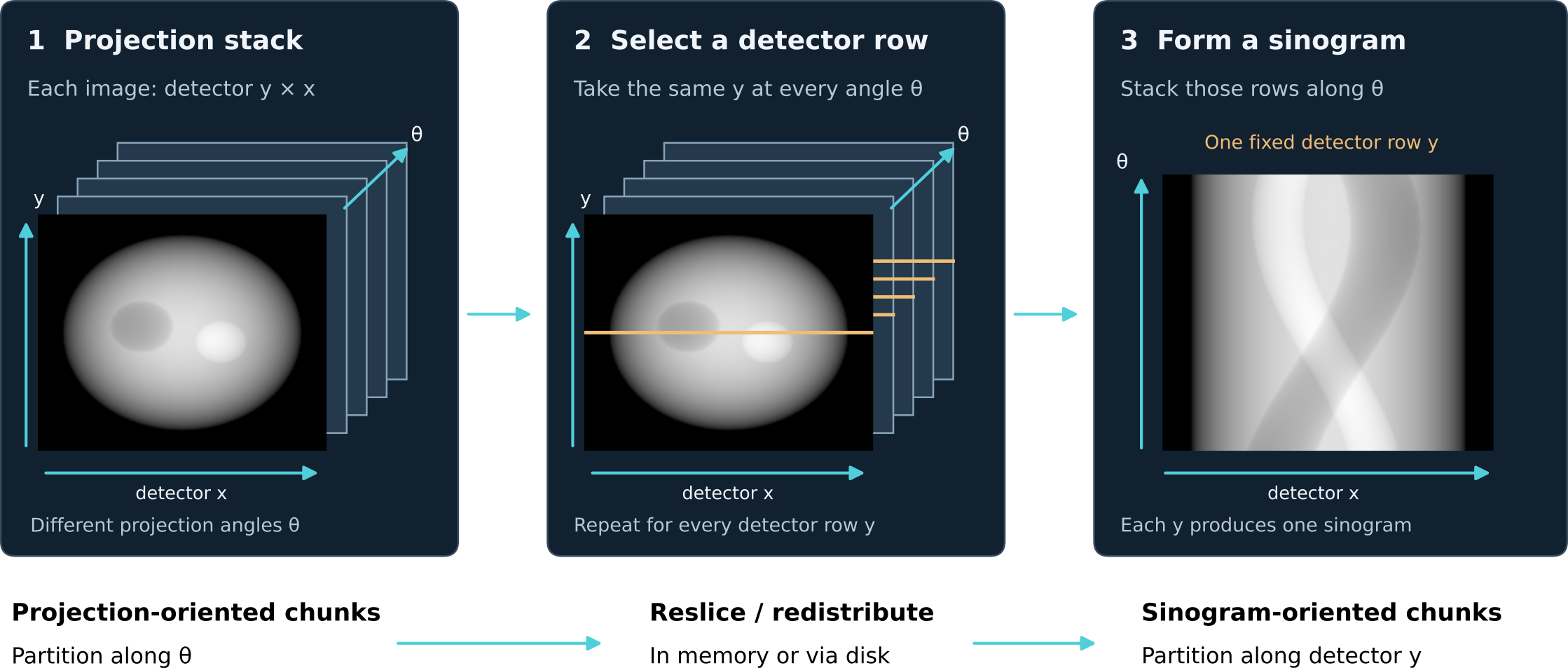
Fig. 6 Projection-oriented chunks are re-sliced and redistributed into sinogram-oriented chunks.#
How re-slicing works#
Each sinogram is formed by selecting the same detector row from every projection angle. HTTomo redistributes these rows among the MPI processes to create sinogram-oriented chunks.
Re-slicing is performed in CPU memory, so data held on GPUs must first be transferred back to the host. If sufficient CPU memory is unavailable, HTTomo uses temporary disk storage instead.
Performance considerations#
Re-slicing can be expensive for large datasets, particularly when temporary disk storage is required. Pipelines should therefore group methods by data pattern to minimise pattern changes. A typical preprocessing and reconstruction pipeline requires only one transition from projections to sinograms.